
The Strait of Hormuz: A Complex Reality of Openness and Closure
3/15/20262 min read
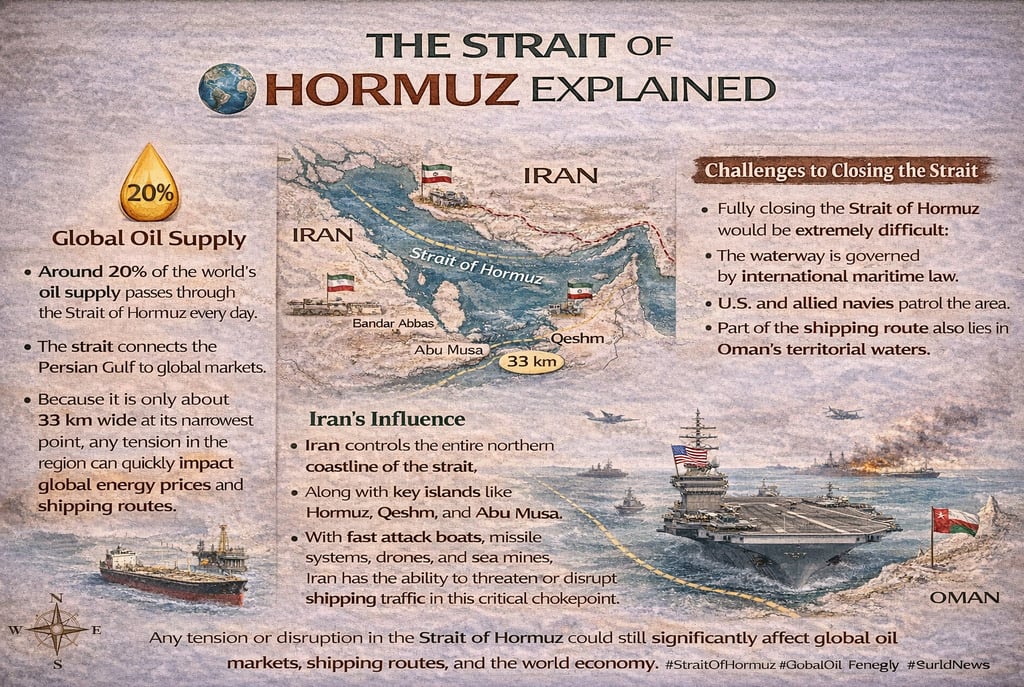
Current Status of the Strait of Hormuz
The geopolitical dynamics surrounding the Strait of Hormuz have witnessed significant fluctuations recently. Iran's Foreign Minister, Abbas Araghchi, has commented on the situation, asserting that the strait is "technically open" to navigation. However, this assertion comes with crucial caveats. According to Araghchi, access is granted predominantly to vessels not linked to nations perceived as adversaries of Iran, especially those involved in military actions against the country. He stated, "the strait of Hormuz is open. It is only closed to the tankers and ships belonging to our enemies, to those who are attacking us and their allies. Others are free to pass." This dichotomy underscores the complex interplay between international maritime law and regional security concerns.
Practical Implications of Closures
While the declaration of openness could suggest a seamless flow of maritime traffic, the practical implications tell a different story. The Islamic Revolutionary Guard Corps (IRGC) confirmed on March 2 that the strait was effectively closed, leading to a dramatic drop in tanker traffic that approached zero. This action aligns with Iran's tightened security framework and highlights its regional strategic interests. By March 5, Iran had clarified its stance further, stating that it would only restrict access to vessels associated with the United States, Israel, and their western allies. This selective closure presents a complex navigation challenge for global shipping and oil transportation through one of the world's most critical maritime chokepoints.
Selective Accessibility: A Future Outlook
Recent developments indicate a more selective accessibility to the Strait of Hormuz. On March 13, a Turkish ship was permitted passage, marking a potential shift in Iran's enforcement of maritime boundaries. Furthermore, two Indian-flagged LPG carriers and a Saudi oil tanker, carrying 1 million barrels of oil destined for India, were allowed transit through the strait. This emerging pattern hints at a potential loosening of restrictions for non-adversarial countries, thus raising questions about future trade dynamics in the region. As different players navigate the complexities of geopolitical tensions, it remains to be seen how these regulations will evolve and what that means for international maritime operations.
In conclusion, while the Strait of Hormuz is currently deemed "selectively open," the reality on the ground tells a more nuanced story about access, security concerns, and regional diplomacy. Stakeholders in the global oil market must remain vigilant, adapting to a rapidly changing maritime landscape that is deeply intertwined with international relations and regional stability.