
Escalation of Tensions: March 15th Military Strikes in the Middle East
3/16/20268 min read
Overview of March 15th Events
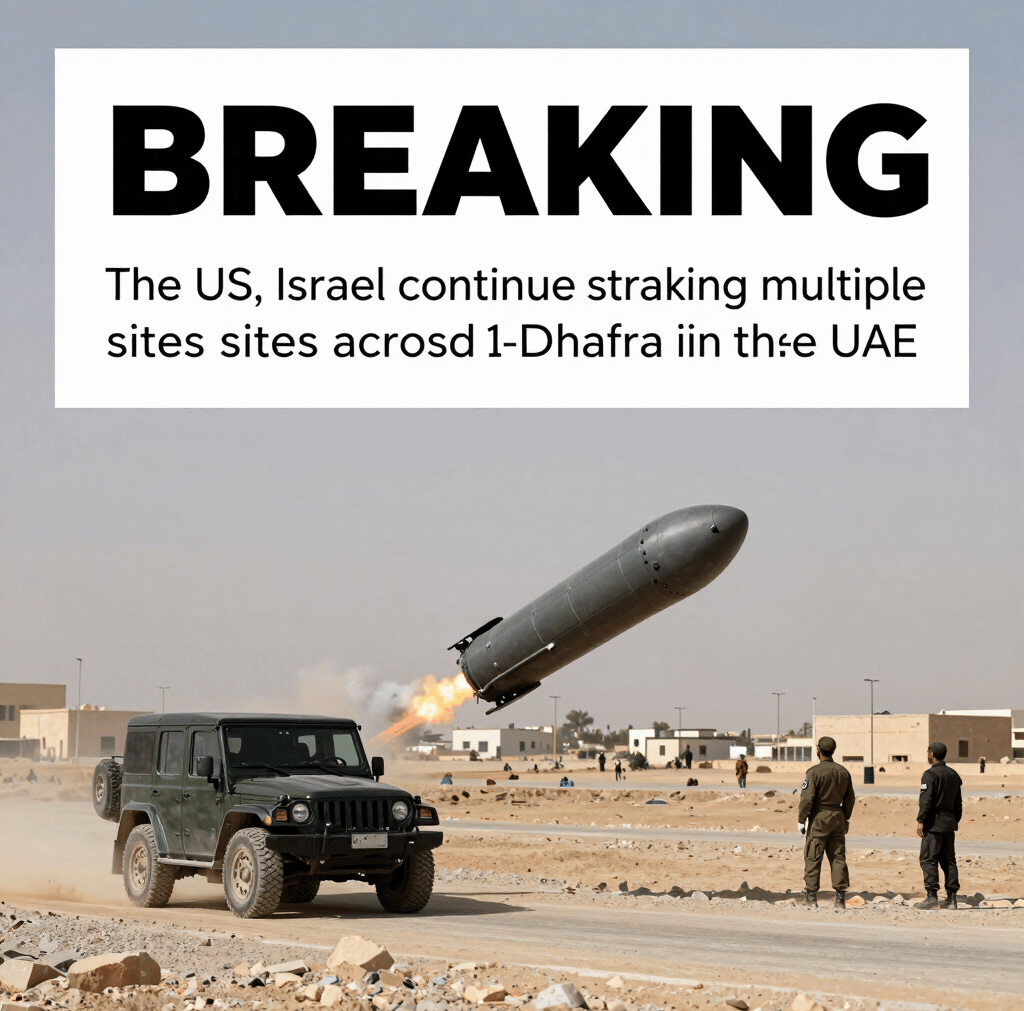
On March 15th, a series of military strikes occurred in the Middle East, notably involving the United States and Israel targeting facilities in Isfahan province, Iran. This escalation of military action was reportedly prompted by a series of perceived threats and activities by Iranian military forces that were seen as destabilizing in the region. The strikes aimed to undermine Iran's military capabilities, particularly those linked to ballistic missile development and nuclear ambitions.
The events of that day unfolded rapidly, marked by the launching of aerial assaults that were said to be coordinated between the U.S. and Israeli forces. Official sources stated that the strikes successfully struck multiple military installations, thereby aiming to degrade Iran’s readiness for potential conflict. This marked a significant intensification of confrontations in the already volatile Middle Eastern geopolitical landscape, where tensions have been rising amidst fear of nuclear proliferation and regional power struggles.
In the broader context, the military actions on March 15th can be interpreted as a direct response to ongoing hostilities and Iran's involvement in regional conflicts, particularly its support for proxy groups in Lebanon and Syria. The geopolitical implications of these strikes extend beyond immediate military objectives, setting the stage for increased instability across the region. Analysts suggest that while such strikes may achieve short-term tactical aims, they could also provoke further retaliation from Iran, thus perpetuating a cycle of conflict.
The Role of Hypersonic Missiles in Modern Warfare
Hypersonic missiles represent a significant evolution in modern military technology, characterized by their ability to travel at speeds exceeding Mach 5, or five times the speed of sound. This speed allows them to outpace conventional missile defense systems, which are typically designed to intercept slower, ballistic projectiles. In the context of the recent military strikes conducted by Iran on March 15th, hypersonic missiles played a pivotal role, contributing to the rapid escalation of hostilities in the region.
The technology behind hypersonic missiles combines advanced aerodynamics with sophisticated propulsion methods, including scramjet engines, which help maintain high-speed flight over extended distances. This unique capability allows military forces to strike targets with unprecedented speed and accuracy, thereby complicating opponents' defense strategies. The significance of this missile technology is underscored by its potential to penetrate air defense systems, making it a formidable tool in the arsenal of any nation that possesses it.
Iran's recent deployment of hypersonic missiles during the strikes underscores a shift in military strategy, enabling them to project power beyond their borders effectively. The use of such advanced weaponry not only alters the dynamics of regional conflicts but also raises broader concerns regarding international security. As nations respond to this emerging threat, the implications of hypersonic missile capabilities will likely lead to an arms race, prompting an acceleration in the development of countermeasures by other countries.
In this light, hypersonic missiles are not merely a technological advancement; they represent a substantial shift in warfare paradigms, posing challenges that extend beyond military engagements. Their deployment by Iran during the recent strikes serves as a stark reminder of the potential for rapid escalation in conflict situations, underscoring the urgent need for diplomatic efforts to mitigate such tensions.
Iran's Response to Military Actions
In the wake of the recent military strikes in Isfahan, Iran's response underscores its long-standing military strategy of deterrence and retaliation. The strikes, which targeted Iranian military capabilities, have prompted Tehran to reassess its strategic posture in the region. Iran's military doctrine emphasizes a swift and decisive response to any perceived threats to its sovereignty and territorial integrity. This response is not merely an act of retaliation but is also a demonstration of Iran's resolve to deter further hostility.
One of the pivotal aspects of Iran’s military strategy involves striking back at strategic U.S. and allied military installations. Notably, the Al-Dhafra air base in the United Arab Emirates has emerged as a key target, given its role as a hub for American air operations in the region. Iran’s missile capabilities have been developed with the intent of placing pressure on these pivotal locations, which serve as operational centers for activities that Iran views as adversarial. By targeting such facilities, Iran aims to signal its capability and willingness to defend its interests.
The potential repercussions of Iran’s military actions extend beyond the immediate tactical landscape. Retaliatory strikes against targeted installations could escalate tensions further, leading to a cycle of military responses that destabilize the region. This escalation risks drawing in other regional and global powers into the conflict, complicating diplomatic avenues for de-escalation. A prolonged military confrontation could significantly alter the balance of power in the Middle East, affecting not just Iran and its immediate adversaries, but also impacting global oil markets and regional economic stability.
The Impact on Kuwait: Casualties and Response
The recent military strikes on March 15th have notably affected Kuwait, particularly highlighting the vulnerability of strategic military installations. An alarming incident occurred at the Ahmed Al-Jaber air base when drones targeted this critical site, resulting in injuries to three Kuwaiti soldiers. The assaults drew immediate attention to the need for heightened security measures and preparedness against future aerial threats.
In response to the drone strikes, the Kuwaiti government promptly convened an emergency meeting to evaluate the implications of this unprecedented attack and to devise strategies for enhancing national security. Military officials expressed grave concern over the incident, underscoring the necessity for swift and decisive action to fortify the nation’s defense capabilities. The Ministry of Defense also released a statement reaffirming Kuwait’s commitment to safeguarding its sovereignty and the safety of its armed forces.
Furthermore, the incident has sparked discussions within the Kuwaiti Parliament regarding defense financing and international collaboration efforts for bolstering aerial defense systems. This escalation has prompted Kuwait to reassess its military alliances and consider potential joint exercises with allied forces to better prepare for any future incursions.
Kuwait's leadership has made it clear that effective response strategies need to be implemented to deter similar threats while ensuring that military personnel receive the necessary support and resources. The injuries sustained by the soldiers have prompted an outpouring of public support and solidarity, emphasizing the crucial role that the armed forces play in maintaining national security.
As Kuwait navigates through this critical phase, the focus will be on strengthening their defenses and ensuring that the military is well-prepared to respond to emerging regional threats, thus, reinforcing the importance of a proactive approach in the face of uncertain geopolitical landscapes.
The military strikes carried out by the United States and Israel in Isfahan province represent a significant escalation in their ongoing strategy to counteract Iranian influence in the Middle East. Both nations view Iran's growing military capabilities and assertive regional policies as threats to their security and geopolitical interests. The objectives of these strikes can be understood within the broader context of maintaining stability in the region and ensuring the safety of both American and Israeli citizens.
The United States has long been committed to countering Iran's nuclear ambitions and its support for proxy groups that pose a challenge to regional stability. By targeting Iranian assets, the U.S. aims to signal its commitment to allies in the region, particularly Israel, and reaffirm its stance against any aggression stemming from Tehran. This military action is also a message to other adversaries that the U.S. is prepared to use force as a means of maintaining its interests.
For Israel, the strikes align with its long-standing policy of preemptive action against perceived threats. Israel views Iran’s increased presence in Syria and its backing of militant groups in Lebanon and Gaza as direct threats to its national security. The military operations reflect Israel's strategic desire to diminish Iran's operational capabilities, thereby preventing potential attacks on Israeli territory.
Moreover, the military strikes are part of a coordinated effort among allies to curb Iran's influence across the Middle East. The U.S. and Israel's actions aim to undermine Iran's regional power projection, which they believe could lead to a more stable and secure environment conducive to their national interests. This dynamic illustrates the complex interplay of military, political, and diplomatic efforts employed by the U.S. and Israel in response to the challenges posed by Iran.
International Responses and Reactions
The recent military strikes on March 15 in the Middle East have provoked a multitude of responses from various international actors, ranging from government officials to global organizations. World leaders have expressed their concerns over the rapid escalation of tensions, underscoring the potential for broader conflicts that could jeopardize regional stability. For instance, leaders from the European Union have called for immediate de-escalation, emphasizing dialogue as the primary means to resolve the issues at hand.
In a notable reaction, the United Nations has voiced its apprehension regarding the military actions, reiterating the importance of respecting national sovereignty and adhering to international law. This call to action has been echoed by various non-governmental organizations, which advocate for peaceful resolutions rather than military engagements. Analysts have pointed out that diplomatic efforts must be prioritized to prevent further deterioration of the situation, as continued military activity could have dire repercussions for global security.
Moreover, countries involved in the situation have also made their positions clear. Regional powers have engaged in discussions to assess the impact of these strikes on their security and the stability of the region. Some nations are working collaboratively to explore avenues for mediation, while others are re-evaluating their military strategies in light of recent developments. The varied responses highlight a complex web of interests and alliances that influence the region's geopolitical landscape.
The escalating military actions have not only raised alarm within government circles but have also captured the attention of analysts and scholars, prompting extensive debate regarding the potential for conflict escalation. The international community remains watchful, as any miscalculation during this tense period could lead to unintended consequences that might affect global peace. As discussions continue, the necessity for a coordinated international response has become increasingly apparent, putting pressure on leaders to act decisively in promoting peaceful solutions.
Future Implications and Scenarios
The military strikes on March 15 are set against a backdrop of increasing tensions in the Middle East, particularly concerning Iran's role in global geopolitics. As countries assess the ramifications of these strikes, several possible scenarios emerge, each with the potential to reshape the region's future. One immediate implication is the possibility of escalated military engagements. The Iranian leadership may respond to these strikes with retaliatory actions, potentially intensifying existing conflicts and expanding them to involve other regional actors.
Furthermore, the strikes could result in shifts in military alliances. Countries relying on U.S. support may re-evaluate their strategic partnerships, while those aligned with Iran may seek to fortify their alliances against perceived threats. In particular, states such as Iraq, Syria, and various militant groups with ties to Iran could become pivotal players in any escalation, altering the balance of power within the region.
The geopolitical landscape may also undergo significant transformation. Changes in the U.S. foreign policy approach could be anticipated, especially in light of domestic and international pressures. Successive administrations will consider the ramifications of continued military action versus diplomatic engagements in pursuit of stability. If the U.S. opts for a more aggressive posture, this may lead to broader regional instability.
Moreover, the strikes may influence military strategies employed by both Western and Middle Eastern nations. The emphasis may shift toward enhanced surveillance and preemptive strikes, fundamentally altering how conflicts are managed. Long-term, this could lead to an arms race, as nations feel compelled to bolster their military capabilities in preparation for potential future confrontations.
In conclusion, the events surrounding March 15 will likely have lasting consequences on military alliances, geopolitical dynamics, and regional stability in the Middle East. The unfolding scenarios merit close observation, as they will significantly impact the future of the region and its inhabitants.